Showing posts with label Reviews. Show all posts

HTC One Google Play Edition Review

The HTC One Google Play Edition is the answer to many user's dreams for a device approaching Android perfection. When we originally reviewed the HTC One, we expressed appreciation for some of the software enhancements packaged in HTC's Sense 5 user interface, but felt that the pure Google Android experience found on Nexus devices offered a less cluttered, cleaner and more consistent user experience. HTC has now delivered on this wish in the Google Play Edition of its vaunted One 2013 smartphone flagship. So how does it stack up in reality?


It is universally acknowledged that HTC has sculpted a beautiful product in the HTC One. When you pick it up, it immediately conveys a sense of prestige and quality that puts it on par with Apple's equally stunning iPhone 5 design. However, it is considerably larger than the iPhone 5 in the hand and also slightly heavier. In addition to the large 4.7-inch display that dominates the front of the device, the micro-drilled stereo speaker grills also help to accentuate the design while producing the best smartphone speaker experience we have yet to hear. However, by comparison with the Samsung Galaxy S4, its bezel is noticeably larger as a result, giving Samsung the opportunity to create an edge-to-edge design though this pushes the Samsung speaker to the rear of the device, compromising audio quality and clarity.

The hardware of the pure-Google HTC One has remained the same as what its "regular" sibling has to offer. The combination of a Snapdragon 600 SoC with a potent quad-core Krait CPU, 4.7" of a 1080p display, an optically-stabilized camera, and built-in stereo speakers is about as fine as its gets in the smartphone realm these days.

Positives
Negatives
Android Jelly Bean 4.2.2
Highly prized
2300mAh battery
Camera app offers only basic settings
4.7" 16M-color 1080p Super LCD3 display with 469ppi pixel density; Gorilla Glass 2
Screen brightness isn’t the strongest
4 MP autofocus "UltraPixel" camera with 1/3'' sensor; 2µm pixel size; LED flash; OIS
Underwhelming 4MP ultra-pixel camera
2.1 MP front-facing camera with 1080p video recording
No  memory card slot
32 GB built-in storage; 2GB RAM
Available only in the United States with no subsidies for $599
Qualcomm APQ8064T Snapdragon 600 SoC with four 1.7GHz Krait 300 cores; Adreno 320 GPU
Only a few of the HTC Sense enhancements are present
Quad-band GSM; Quad-band HSDPA; LTE support
32GB version available only, single silver color scheme
GPS with A-GPS and GLONASS support

Wi-Fi a/b/g/n/ac with DLNA and Wi-Fi Direct; Bluetooth 4.0; NFC


Considering the HTC One has been selling for a few months now, the main highlight of the Google Play Edition is the presence of stock Android 4.2.2 Jelly Bean. The unmodified OS, coupled with the One's powerful hardware and sleek design are bound to offer an experience straight from the dreams of Android purists.

Of course, plenty of people will argue that the HTC One Google Play Edition is an exercise in wasting precious cash. With the latest version of HTC Sense sporting functionality which closely resembles that of a Swiss army knife, it is not easy to make a case for spending six hundred dollars and the applicable taxes on an unsubsidized HTC One which comes with less functionality out of the box.

As with both the design and display on the HTC One Google Play Edition, and the rest of the hardware for that matter, the UltraPixel camera remains unchanged. It continues to offer a larger than usual F/2.0 aperture, with an oversize sensor that can capture more light than many 13-megapixel cameras, HTC’s dedicated ImageChip that delivers continuous auto-focus, color shading, noise reduction and an enhanced HDR function, along with optical image stabilization. So while the fundamentals remain in place to produce exceptional photos in low-light conditions and in general use, the built-in software that helps to further differentiate the HTC One with Sense 5 is missing. In its place is the stock Android 4.2.2 ‘Jelly Bean’ camera app that is one of the few relative weaknesses in Android, Photo Sphere notwithstanding.

However, on the plus side, there are numerous Android photography apps that can be downloaded to take the place of HTC’s Sense 5 inclusions such as HTC Zoe, that can achieve very similar results. However, it does mean replacing one Sense 5 app, with at least two or more. This example, brings into sharp focus the double-edged sword of an Android device running customized software, versus the stock Android build. There is some give and take, but it does make a difference to the overall use experience and it something we will discuss further below. Regardless, the camera on the HTC One continues to be a brave experiment by HTC, as it puts forward the case for optics, sensor quality and imaging technology first, side stepping the smartphone megapixel arms race. It is not the best camera on a smartphone in all instances, but in typical smartphone usage scenarios it is very competitive. The photos below are have not been edited and are illustrative of the capabilities of the HTC One camera in general use.


We’ve already explored some of the benefits and disadvantages of the HTC One running the pure Google experience versus the same device running HTC Sense 5. Playing with the two devices back to back really highlights just how important the operating system is to the entire look, feel and function of a device. HTC’s hardware is the one gorgeous constant in this. Either way you go, you are getting a what is probably the premier smartphone experience going around at the moment. Ultimately, your decision may depend upon what it is you want from your device.

If you want all the features that HTC can pack into the One, then the Sense 5 version is for you. The raw hardware specifications may be exactly the same, but HTC has added a number of very useful additions to the pure Google experience, without messing with Google’s fundamental formula too much. This is most notable in the in-built camera app, as discussed above, which not only includes the Vine-like HTC Zoe functionality, but also a burst mode that can simultaneously capture up to 20 photos at once as well as a three second video. The gallery app is also enhanced and features some neat capabilities including being able to automatically stitch together a 30 second movie, and automatically set up create photo slideshows. BlinkFeed is also a useful and interesting news and social updates live feed for your home screen, as is the Sense TV integrated TV remote control app.


In reality, you can’t go wrong with any of the options listed here. The Nexus 4 is great buying, but it does not offer the cutting edge design or specifications of the HTC One. The HTC One with Sense 5 is an outstanding device that does not stray too far from the pure Google experience, yet it brings with it some interesting and useful software enhancements over and above the stock Google user experience. However, in addition to getting faster software updates when they become available, the HTC One Google Edition is also extremely fast and responsive. Google’s Android has never looked as good and worked better than it does on the HTC One Google Play Edition. Right now, it is the pinnacle of the Android user experience and it will only get better when it gets the Android 4.3 update in the near future.

BlackBerry Q5 review

The BlackBerry Q5 is the third BlackBerry 10 device to hit the market and the second to feature a physical keyboard (the first being the Q10). It was originally unveiled during BlackBerry Live 2013 and while it has been released in various markets already, it will ultimately be available in a variety of colors including black, white, red and pink.

The Q5 is a more affordable option to those not opting for the higher priced BlackBerry Z10 or BlackBerry Q10 and arguably could have (or should have) been released along with the others - or even as the first BlackBerry 10 device. The price of the Q5 is currently around $500USD so even though it's the least expensive BB10 device currently available, you'll still be shelling out quite a bit to pick one up (though it will most likely be cheaper if/when it hits the US).


At first glance, the Q5 has all the important checkboxes ticked. You get a dual-core Krait chipset, a 3.1" display of the same 720 x 720 pixel resolution and a four-row QWERTY keyboard for that serious texting and emailing.

Key Features
Main Disadvantages
Quad-band GSM/GPRS/EDGE, tri/quad-band UMTS/HSPA, 100 Mbps LTE
Screen size is somewhat small by today's standards and the 1:1 aspect is awkward for video watching
NFC
BlackBerry World is still missing key apps
Dual-core 1.2 GHz Krait, 2GB RAM, Adreno 225
No FM radio
5 MP auto-focus camera with face detection and Time Shift; LED flash
BlackBerry Maps may be even worse than Apple Maps
2MP front facing camera
QWERTY keyboard could be better
Full HD (1080p) video recording at 30fps; 720p on the front-facing camera

Bluetooth 4.0

Standard microUSB port, microHDMI

Four-row hardware QWERTY keyboard

BlackBerry 10.1 OS; Office document editor

BlackBerry Hub is a unified inbox of all your communication and social networking accounts

Four-row hardware QWERTY keyboard

16GB of storage, microSD card slot; Dropbox and Box.NET integration

Wi-Fi a/b/g/n, Wi-Fi hotspot; Wi-Fi sync

3.5mm audio jack

GPS receiver with A-GPS


The Q5 has some good features overall, but falls short in places as well. What's good is that it has a 1.2GHz processor with 2GB of RAM - more than enough to power the BlackBerry 10 OS and keep it running smoothly. The 3.1" LCD touchscreen is bold and bright and the Q5 is sporting LTE, Bluetooth, WiFi, GPS and NFC. The integrated 2180mAh battery is actually one of the biggest to date, but the fact that it's non-removable is a downer. 

Where is falls short are in things like the small 8GB of internal storage, a 5MP camera and lack of a micro HDMI port. The Curve-style keyboard feels like a bit of a step backwards as well. It's not a bad typing experience but still feels a bit out of date.

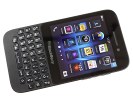
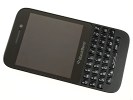
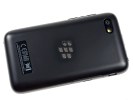
BlackBerry Q5  BlackBerry Q5  BlackBerry Q5

Ultimately the BlackBerry Q5 is a good device. It's not the top quality of the BlackBerry Z10 or Q10 but it will still find it's place in many markets. I actually really enjoyed using it for the past few weeks. I've always been a big fan of the smaller devices and the physical keyboard, so the Q5 is a good fit for me. I won't be making it my full-time device but I'll certainly revisit it from time to time. The Q5 has great battery life, fits well in hand, is very sturdy and works like a champ. I have to take points off for the lack of a removable battery, low resolution camera and lack of HDMI out though.

The Q5 obviously won't be competing with more modern devices, but for BlackBerry users on a budget or those looking to get started with BlackBerry 10, the Q5 is a good option. If you're going to spend the money though, I'd say take the jump and go with the Q10 though.

If you love a physical keyboard and are looking for an inexpensive alternative to the Q10, the Q5 is for you. Available in a variety of colors and at a more affordable price, the Q5 will find it's place among new users and emerging markets with no problem. It has a few downsides as we discussed but overall it's running the same BlackBerry 10 with nearly the same processing power as other devices, so you aren't really compromising too much in the long run by choosing the Q5. If price doesn't matter however, the Q10 (or Z10) are better phones for the money. 

Samsung Galaxy S4 zoom review

Having cornered the Android smartphone market, Samsung now has smart cameras in its sights. The Samsung Galaxy S4 zoom is a crossover of an Android phone and a point-and-shoot camera, trying to put the best of both worlds in your pocket.
   
Samsung Galaxy S4 zoom official photos
It's a lot more compact than last year's Galaxy Camera and this year's Galaxy NX and, unlike both of them, it has full telephony features. So, it has the makings of a midrange Android smartphone but adds a big sensor, xenon flash, Optical Image Stabilization (OIS) and 10x zoom. These things are usually well out of the reach of a smartphone, which needs to be thin.
Thin the Galaxy S4 zoom isn't, but it's got other virtues.

Key features

  • Android-powered phone/camera hybrid with 10x zoom lens with OIS
  • Quad-band GSM/GPRS/EDGE; quad-band 3G with HSPA; LTE
  • 4.3" 16M-color qHD (540 x 960)Super AMOLED capacitive touchscreen with Gorilla Glass 3
  • Android OS v4.2.2 Jelly Bean with TouchWiz UI
  • Dual-core 1.5 GHz Cortex-A9 CPU, Mali-400 GPU; Exynos 4212 chipset
  • 1.5GB of RAM
  • 16 MP autofocus camera, 1/2.33" sensor, xenon flash, Optical Image Stabilization, 10x zoom, continuous autofocus and stereo sound; manual settings
  • 1080p video recording @ 30fps, 720p @ 60fps, 120fps slow-mo
  • 1.9 MP front-facing camera, 720p video recording
  • 8GB of built-in storage, microSD card slot
  • microUSB port with USB host and MHL 2.0
  • Dual-band Wi-Fi a/b/g/n, Wi-Fi Direct and DLNA
  • Bluetooth v4.0
  • NFC
  • GPS with A-GPS, GLONASS
  • IR blaster for remote control functionality
  • Standard 3.5 mm audio jack; Smart volume
  • Accelerometer and proximity sensor
  • Smart screen: Smart stay, Smart rotate
  • Active noise cancellation with dedicated mic
  • Ample 2,330mAh battery with great endurance

Main disadvantages

  • Thicker and heavier than a smartphone
  • Screen not HD, sunlight legibility could have been better
  • Old chipset
  • Shared camera interface makes framing tricky
  • No FM radio
It's like a Galaxy S4 mini and a point-and-shoot camera had a teleportation accident and merged together. Of course, the chipset is a bit older than what the mini has, but still benchmarks well enough. The Zoom even kept the IR blaster.
It used to be that people took a few dozen photos a year. Now they will do the same in a day or two and share them with the world in an instant. And all that thanks to the ever-improving photography skills of phones. The Samsung Galaxy S4 zoom takes this trend to an extreme - its long zoom, OIS and capable flash keep it relevant where a phone would be all but useless.
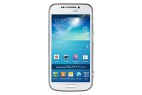
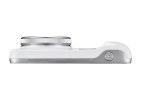
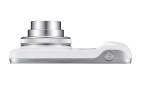
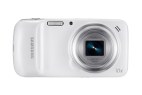
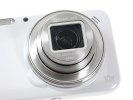
Samsung Galaxy S4 Zoom Review Samsung Galaxy S4 Zoom Review Samsung Galaxy S4 Zoom Review Samsung Galaxy S4 Zoom Review
Samsung Galaxy S4 zoom at ours
Combining two gadgets in one has its advantages - you only have to carry one device. You're buying only one device too.
Source: GSMArena

Samsung ATIV S Neo Preview - Video

Samsung Galaxy S4 mini review

In Samsung's playbook, a mini version of the top smartphone is typically the first new addition to a flagship's fleet. Sticking close to a proven formula, the Galaxy S4 mini is a downsized and down-priced edition, but one that certainly wants to live its own life instead of just being the poor man's S4.
The other flavors of the flagship - the Galaxy S4 Active and the Galaxy S4 Zoom - are more or less niche versions, while the S4 mini should probably have broader appeal. Some of the top end features are obviously missing, both hardware and software wise, but it's a package that has plenty to offer to users who don't necessarily have to have the latest technology.
   
Samsung Galaxy S4 mini official pictures
Samsung decided to stick to Super AMOLED for the new 4.3-inch display, but lowered the resolution to qHD (540 x 960 px). The chipset that powers the Galaxy S4 mini is Qualcomm's latest midrange offering - the Snapdragon 400 - with a dual-core 1.7GHz Krait processor and Adreno 305, which is the low-end member of the latest generation of graphic chips integrated into Snapdragon SoCs.
The still camera has also been downgraded - but 8MP of resolution is actually nothing to frown at. Some of the premium shot modes are missing, but it's still a very capable shooter, with HDR, panoramas, photos with audio, etc. And it does 1080p videos of course.
Finally, the Galaxy S4 mini is powered by the same software combo as the flagship: Android 4.2.2 Jelly Bean and the latest TouchWiz UI.

Key features

  • Quad-band GSM/GPRS/EDGE; quad-band 3G with HSPA; LTE
  • 4.3" 16M-color qHD Super AMOLED capacitive touchscreen; 256ppi
  • Android OS v4.2.2 Jelly Bean with TouchWiz UI
  • Dual-core 1.7GHz Krait CPU, Adreno 305 GPU; Qualcomm Snapdragon 400 chipset
  • 1.5GB of RAM
  • 8 MP autofocus camera with LED flash, 1080p video recording @ 30fps, continuous autofocus and stereo sound
  • 1.9 MP front-facing camera, 1080p video recording
  • Dual-band Wi-Fi a/b/g/n/ac, Wi-Fi Direct and DLNA
  • GPS with A-GPS, GLONASS
  • 8/16GB of built-in storage
  • microSD card slot
  • microUSB port with USB host and MHL
  • Bluetooth v4.0
  • NFC
  • IR port for remote control functionality
  • Stereo FM radio with RDS
  • Standard 3.5 mm audio jack
  • Accelerometer and proximity sensor
  • Active noise cancellation with dedicated mic
  • Ample 1,900mAh battery; user replaceable

Main disadvantages

  • 720p screens available in the price range
  • No Air View, Air gestures or Multi-view
  • Underpowered, compared to the Galaxy S4
  • Played out design
As the Galaxy S4 mini lacks some of the sensors, the cool Air Gestures are not enabled. The Air View is not an option either, along with the Multi-View split screen feature. What the Galaxy S4 mini offers over the flagship S4 is an FM radio, a feature that the intended market is likely to appreciate.
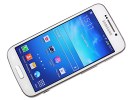
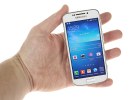
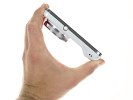
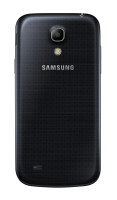
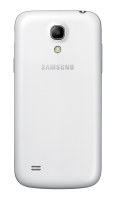
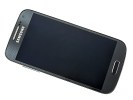
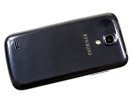
Samsung Galaxy S4 Mini Samsung Galaxy S4 Mini Samsung Galaxy S4 Mini Samsung Galaxy S4 Mini
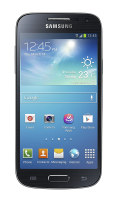
Samsung Galaxy S4 mini in White Frost and Black Mist
Overall, the Galaxy S4 mini copies the original design to a T, but has to do without some of the premium features and last-gen hardware of its greater sibling. It's a compact and more affordable alternative.

Source: GSMArena

Nokia Lumia 925 review

The Nokia Lumia 925 is a subtle but meaningful update of what was - literally until a few days ago - the company's top smartphone offering. While designers and engineers were busy fixing the Lumia 920, the guys next door produced a louder bang with the Lumia 1020.
Still, the Lumia 920 was in many ways the flagship that really showed the company with its best foot forward. And the Lumia 925 is a very welcome facelift, sporting a lighter, thinner aluminum frame instead of the all-polycarbonate bulk of its predecessor.
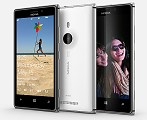
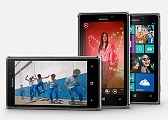
Nokia Lumia 925 Nokia Lumia 925 Nokia Lumia 925
Nokia Lumia 925 official photos
The screen is of the same size and resolution, except this time around it's an AMOLED panel, which works great with the mostly black WP8 interface. It's the AMOLED screen too that takes credit for the fat loss. Other small highlights are the inclusion of an FM radio and some minor software improvements, but those will also be seeded to the Lumia 920 with a software update.

Key features

  • Quad-band GSM/GPRS/EDGE support
  • Quad-band 3G with 42 Mbps HSDPA and 5.7 Mbps HSUPA support
  • 4.5" 16M-color PureMotionHD+ AMOLED capacitive touchscreen of 1280 x 768 pixels
  • 8 megapixel autofocus camera with LED flash, 1080p@30fps video recording
  • Optical Image stabilization with floating lens technology
  • 1.3MP front-facing camera
  • Windows Phone 8 OS
  • 1.5GHz dual-core Krait CPU, Adreno 225 GPU, Qualcomm MSM8960 chipset, 1GB of RAM
  • Wi-Fi 802.11 a/b/g/n, dual-band
  • GPS receiver with A-GPS and GLONASS support
  • Free lifetime voice-guided navigation
  • 32GB of inbuilt storage
  • Stylish aluminum frame results in a thinner and lighter profile than the Lumia 920
  • Active noise cancellation with a dedicated mic
  • Wireless charging with optional accessories
  • Built-in accelerometer, gyroscope and proximity sensor
  • Standard 3.5 mm audio jack
  • microUSB port
  • Bluetooth v3.0 with A2DP and file transfers
  • SNS integration
  • Xbox Live integration and Xbox management
  • NFC support
  • Digital compass
  • Nokia Music
  • FM radio

Main disadvantages

  • No microSD card
  • No system-wide file manager
  • No lockscreen shortcuts
  • Mono sound for video recording
When it comes to the updated chassis, the Lumia 925 refresh can be likened to BMW's M-Series - they're very similar to their non-M-powered brethren when it comes to design, but the updated body is a definite improvement over the original. In terms of what goes under the hood though, these are two different schools of thought. Because the 925 is basically the same package as the the Lumia 920.
The Lumia 925 is all about the looks and feel - the updated body is a definite improvement, and there's a few extra features thrown in to sweeten the pot as well. Although it may be minor, the inclusion of the thinner and, more importantly, lighter frame takes care of two of the disadvantages we listed for the Lumia 920.
Nokia Lumia 925 Review Nokia Lumia 925 Review Nokia Lumia 925 Review
The Nokia Lumia 925 studio pics
The chipset is the same as before and while it's not a benchmark blaster, but WP devices have consistently demonstrated they don't need too much horsepower to give a smooth ride through the UI. Of course, heavier apps may tend to load a bit slower, but lags and system freeze should be pretty much out of the question.

Source: GSMArena

HTC One mini preview

The HTC One is certainly one of the smartphones of the year and has come a long way towards helping the Taiwanese company out of its financial woes. It was only logical then that HTC will try to capitalize of that success by bringing the same formula to other parts of its portfolio. We already got the upscaled version with the Butterfly S, so now it's time to shrink the design with the HC One mini.
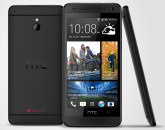
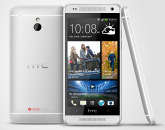
HTC One mini Preview HTC One mini Preview HTC One mini Preview
HTC One mini official images
Over the last few years large phones (that grow ever bigger) have managed to claim a monopoly on good specs it seems, which made many (including quite a few members of our team, we even started a petition) yearn for a compact, but premium Android. The Galaxy S4 (the arch rival of the One) already got its mini version, but that one made too great a compromise with the screen. Let's see if HTC has done better.

HTC One mini at a glance:

  • General: Quad-band GSM/GPRS/EDGE, quad-band UMTS/HSPA, LTE
  • Form factor: Touchscreen bar phone
  • Dimensions: 132x 63.2 x 9.3 mm, 122 g
  • Display: 4.3" 16M-color 720p (720 x 1280 pixels) Super LCD 2 capacitive touchscreen, 341ppi pixel density; Corning Gorilla Glass 3
  • Chipset: Qualcomm Snapdragon 400, Dual-core 1.4 GHz Krait 300, 1GB RAM, Adreno 305
  • OS: Android 4.2.2 Jelly Bean with Sense 5
  • Memory: 16GB storage
  • Camera: 4 megapixel auto-focus camera with ultra-pixels; LED flash
  • Video camera: Full HD (1080p) video recording at 30fps with HDR
  • Front camera: 1.6MP front-facing camera; 720p@30fps video
  • Connectivity: Wi-Fi a/b/g/n, Wi-Fi hotspot, Bluetooth 4.0, standard microUSB port with MHL and USB host, GPS receiver with A-GPS and GLONASS, 3.5mm audio jack
  • Battery: 1,800mAh Li-Po
  • Misc: Aluminum unibod with polycarbonate frame, Beats Audio, BoomSound stereo speakers on the front, HTC Zoe
Some might frown at the idea that a 4.3" smartphone qualifies as mini, but the truth is this size hits a sweet spot. It has enough screen estate to provide enjoyable multimedia and gaming experience as well as enable decent productivity, yet it still allows a smartphone to fit into virtually every pocket.
And the 720p resolution is just right too - the Galaxy S4 mini screen is also 4.3" big but the qHD resolution and 256ppi pixel density spoil the premium feel somewhat. The plastic body didn't help the One mini competitor either.
This is important - there are plenty of mid-range reasonably compact phones already. What we want (and really hope HTC has delivered here) is a compact phone with high-end specs. The HTC One mini spells out premium with an aluminum unibody design and UltraPixel camera with dedicated ImageChip 2, plus BoomSound (stereo speakers on the front with a dedicated amp).
HTC has delivered the best software it has too - Android 4.2.2 Jelly Bean out of the box with Sense 5. The Sense customizations include the BlinkFeed news and social media aggregator, Zoe camera and Video highlights.
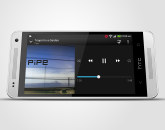
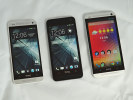
HTC One mini Preview HTC One mini Preview HTC One mini Preview HTC One mini Preview
HTC One mini pays us a visit
Could this be it? The dream phone with good specs, without a huge screen you have to overpay for, even when you don't want it in the first place? At first glance there are only a couple of things that might prevent the HTC One mini from achieving glory. It has a lesser chipset (1.4GHz dual-core Krait CPU, 1GB RAM) compared to both the original One and the Galaxy S4 mini and its storage is limited (just 16GB with no option for expansion).
We only got one short day with it, so we are not sure we'll be able to answer all questions, but we'll do all we can to cover as much of the hardware and software of the HTC One mini as possible. Join us after the break.

Samsung Galaxy S4 mini review

In Samsung's playbook, a mini version of the top smartphone is typically the first new addition to a flagship's fleet. Sticking close to a proven formula, the Galaxy S4 mini is a downsized and down-priced edition, but one that certainly wants to live its own life instead of just being the poor man's S4.

The other flavors of the flagship - the Galaxy S4 Active and the Galaxy S4 Zoom - are more or less niche versions, while the S4 mini should probably have broader appeal. Some of the top end features are obviously missing, both hardware and software wise, but it's a package that has plenty to offer to users who don't necessarily have to have the latest technology.


Samsung decided to stick to Super AMOLED for the new 4.3-inch display, but lowered the resolution to qHD (540 x 960 px). The chipset that powers the Galaxy S4 mini is Qualcomm's latest midrange offering - the Snapdragon 400 - with a dual-core 1.7GHz Krait processor and Adreno 305, which is the low-end member of the latest generation of graphic chips integrated into Snapdragon SoCs.

The still camera has also been downgraded - but 8MP of resolution is actually nothing to frown at. Some of the premium shot modes are missing, but it's still a very capable shooter, with HDR, panoramas, photos with audio, etc. And it does 1080p videos of course.

Finally, the Galaxy S4 mini is powered by the same software combo as the flagship: Android 4.2.2 Jelly Bean and the latest TouchWiz UI.

Key features
  • Quad-band GSM/GPRS/EDGE; quad-band 3G with HSPA; LTE
  • 4.3" 16M-color qHD Super AMOLED capacitive touchscreen; 256ppi
  • Android OS v4.2.2 Jelly Bean with TouchWiz UI
  • Dual-core 1.7GHz Krait CPU, Adreno 305 GPU; Qualcomm Snapdragon 400 chipset
  • 1.5GB of RAM
  • 8 MP autofocus camera with LED flash, 1080p video recording @ 30fps, continuous autofocus and stereo sound
  • 1.9 MP front-facing camera, 1080p video recording
  • Dual-band Wi-Fi a/b/g/n/ac, Wi-Fi Direct and DLNA
  • GPS with A-GPS, GLONASS
  • 8/16GB of built-in storage
  • microSD card slot
  • microUSB port with USB host and MHL
  • Bluetooth v4.0
  • NFC
  • IR port for remote control functionality
  • Stereo FM radio with RDS
  • Standard 3.5 mm audio jack
  • Accelerometer and proximity sensor
  • Active noise cancellation with dedicated mic
  • Ample 1,900mAh battery; user replaceable
Main disadvantages
  • 720p screens available in the price range
  • No Air View, Air gestures or Multi-view
  • Underpowered, compared to the Galaxy S4
  • Played out design

As the Galaxy S4 mini lacks some of the sensors, the cool Air Gestures are not enabled. The Air View is not an option either, along with the Multi-View split screen feature. What the Galaxy S4 mini offers over the flagship S4 is an FM radio, a feature that the intended market is likely to appreciate.

Samsung Galaxy S4 Mini  Samsung Galaxy S4 Mini  Samsung Galaxy S4 Mini  Samsung Galaxy S4 Mini

Overall, the Galaxy S4 mini copies the original design to a T, but has to do without some of the premium features and last-gen hardware of its greater sibling. It's a compact and more affordable alternative - and aiming to be one that many people end up buying.

Source: GSMArena

Copyright @ 2013 Mobisaur Mohammed Dawjee